

The best pet feeding station is a dedicated nook, either a converted piece of furniture or a small built-in, placed in a low-traffic spot away from the litter box. It gives you less mess, tidier storage, and a more comfortable pet, and Canadian retailers like Valuhub carry the carts, cabinets, and bins to build one this weekend.
TL;DR:
- Choosing a low-traffic, quiet corner away from litter boxes is essential, as cats avoid eating near elimination areas and dogs investigate them.
- Using repurposed furniture like dressers or nightstands allows budget-friendly, customized feeding stations that can include storage and cleaning features.
- Proper bowl height depends on pet size, with deeper-chested breeds advised against elevation without veterinary consultation to prevent health risks.
- Separate feeding stations for multiple pets reduce conflict, with solutions like microchip feeders, elevated bowls, or timed meals to prevent resource guarding.
- Regular cleaning routines, including weekly dishwasher-safe washing and monthly disinfecting, are crucial to maintain hygiene and prevent bacterial buildup.
Table of Contents
- Where to put your pet feeding station ideas into practice
- Top pet feeding station ideas worth building
- Materials and tools for a weekend build
- Getting bowl height right for your pet’s size
- Solving multi-pet feeding conflicts
- Keeping the station clean without much effort
- Converting a dresser into a feeding station this weekend
- How Valuhub’s product lineup fits these builds
- Budget-friendly feeding station ideas that don’t skimp on function
- Helping your pet adjust to a new feeding spot
- A few things I’d tell any pet owner before they start cutting wood
- Valuhub picks that make these builds easier
- Sources
Where to put your pet feeding station ideas into practice
Location decides whether your setup actually works day to day. Cats and dogs eat calmly in quiet corners, not hallways or entryways where foot traffic startles them mid-bite. Keep the station away from the litter box entirely. Cats are hardwired to avoid eating near where they eliminate, and dogs will happily investigate a litter box if it sits beside their bowl.
Put water within a few steps of the food, but not directly touching the bowl, since kibble crumbs and litter dust both foul water fast. A spot near (not under) a window works well for cats, who like sightlines while they eat. For dogs, a kitchen alcove or mudroom corner away from the main walkway keeps the bowl from becoming a tripping hazard. Designers increasingly treat the feeding spot as a combined bowl-and-storage solution rather than a bowl plunked on the floor, and that shift changes where you look for space in the first place.
Top pet feeding station ideas worth building
- Dresser conversion. An old dresser with two bowl holes cut into the top and a drawer repurposed for kibble storage suits medium and large dogs. Use a piece you already own or find secondhand.
- Nightstand feeder. Scaled down for cats or small dogs, a nightstand gives one bowl cutout plus a lower cabinet for litter scoops or treats.
- Under-counter pull-out. A slide-out tray tucked beneath a kitchen counter hides bowls entirely when not in use. Works best for single-dog homes with tight kitchens.
- Kitchen island alcove. A side-of-island cutout with tile or sealed countertop handles daily spills and can include a pot filler for quick water refills. Best for renovation-minded homeowners with dogs.
- Wall-mounted floating shelf. Removable stainless basins set into a floating shelf save floor space and lift free for cleaning. Ideal for cats or small apartments.
- Bench with cutouts. A mudroom bench with two bowl holes doubles as seating and feeding station, good for multi-pet homes with dogs of similar size.
- Rolling cart station. A wheeled kitchen cart holds bowls on top and food bins below, and rolls away for parties or cleaning. Fits any pet, especially renters.
- Weatherproof outdoor station. For farm dogs or barn cats, a sealed enclosure with a timer-fed dispenser keeps kibble dry and pests out.
- Compact apartment nook. A narrow vertical cabinet with a pull-out bowl tray suits studio living with one cat or small dog.
Materials and tools for a weekend build
Most conversions need the same core supplies. Keep this list handy before you start cutting anything.
- Plywood or a prefinished panel for the bowl insert
- Removable stainless steel bowls (easier to clean than fixed ceramic inserts)
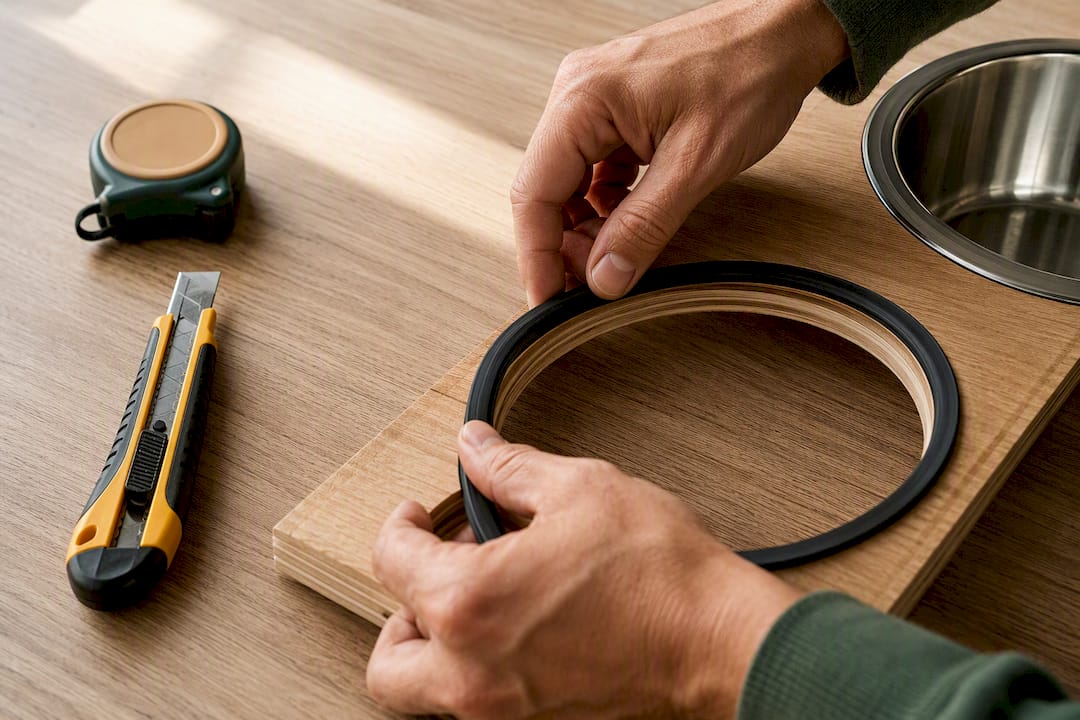
- Adhesive weatherstrip to stop bowls sliding in their holes
- A silicone containment mat with a raised rim
- An airtight bin sized to your bag of kibble, usually 20 to 40 litres for a mid-size dog
For tools, a jigsaw and drill with a hole saw attachment cut clean bowl openings. If you’d rather skip the sawdust, a prebuilt rolling cart or wall-mounted shelf gets you the same result without touching a power tool. Outdoor builds need a food-safe, weather-resistant finish and a sealed lid to keep moisture and insects out of stored kibble.
Pro Tip: Cut bowl holes slightly smaller than the bowl’s lip, then add the weatherstrip around the edge. It grips the bowl in place and stops the daily rattle and slide that drives pets crazy at mealtime.
Getting bowl height right for your pet’s size
Measure your pet’s shoulder height, then subtract a few centimetres. That is roughly where the bowl rim should sit. Small dogs and cats generally do fine with floor-level bowls. Larger breeds and senior pets with joint stiffness often benefit from elevation because it reduces the neck-down reach at every meal.
One caveat matters here: deep-chested breeds like Great Danes and German Shepherds carry a higher risk of bloat, and some veterinarians advise against elevated bowls for these dogs specifically. Check with your vet before raising the bowl for a deep-chested breed. Stainless steel resists bacteria better than plastic, and ceramic works well for style-conscious homes. Cats do best with wide, shallow dishes since narrow bowls press against sensitive whiskers.
Solving multi-pet feeding conflicts
Two or more pets sharing a kitchen almost always leads to food stealing or one animal eating too fast out of anxiety. Separate stations solve most of the tension, whether that means opposite corners of one room or entirely different rooms with a baby gate between them.
- Feed cats on an elevated surface dogs can’t reach, or in a separate closed room
- Use microchip feeders that only open for the registered pet to stop one animal eating another’s portion
- Add timed feeders for households where schedules don’t line up with feeding times
- Try slow feeders or puzzle bowls for fast eaters, which also add mental stimulation
If free-feeding causes resource guarding or weight issues in one pet, switch to scheduled meals with prompt bowl pickup. It’s a simple management fix that solves most multi-pet friction without new hardware.
Keeping the station clean without much effort
A feeding station only stays functional if the cleaning routine is realistic. Set a simple rhythm and stick to it:
- Daily: rinse and refill water, wipe the mat if there’s visible spill
- Weekly: run bowls and mats through the dishwasher or a hot hand wash
- Monthly: wipe down the airtight bin inside and out, check the mat for scratches that trap bacteria
Dishwasher-safe stainless bowls and a weekly hot wash cut down on biofilm buildup that plain rinsing misses. Pet bowls left unwashed for days can rival a doorknob for bacterial load, which is exactly why the weekly hot-wash habit matters more than most owners assume. Choose a mat with a raised rim, dishwasher-safe silicone, and a non-slip backing so it stays put during enthusiastic eaters’ meals.
Converting a dresser into a feeding station this weekend
- Measure your pet’s bowls and mark two circles on the dresser top, spaced for comfortable side-by-side eating.
- Cut the openings with a jigsaw or hole saw, sizing them slightly smaller than the bowl lip.
- Fit removable stainless bowls into the holes, using weatherstrip around the rim to stop sliding.
- Clear out a drawer to hold an airtight kibble bin, scoop, and spare bowls.
- Seal any bare wood with a food-safe finish and let it cure fully before use.
Budget a Saturday afternoon and expect to spend less on materials than a single bag of premium kibble, especially if you’re upcycling furniture you already own. Prefer to skip the sawdust entirely? A rolling cart or ready-made storage cabinet gets you the same layout without a single cut.
Pro Tip: Build the bowl insert as a removable panel rather than gluing it permanently. You’ll thank yourself the first time you need to pull both bowls for a proper scrub.
How Valuhub’s product lineup fits these builds
A rolling kitchen cart works as a mobile feeding station without any cutting. A pantry cabinet gives you the integrated storage a dresser conversion mimics, minus the drilling. Airtight bins and silicone mats round out the hygiene side of any setup covered above. These pieces work because they’re sized right, they roll or slide into tight kitchen corners, and their tops lift or remove for the daily wipe-down a feeding station needs. Everything ships from Canadian warehouses, so there’s no customs surprise waiting when your cart arrives.
Budget-friendly feeding station ideas that don’t skimp on function
You don’t need a renovation budget to fix a messy feeding corner. Secondhand furniture is the cheapest entry point: a thrift-store nightstand costs a fraction of a purpose-built pet furniture piece and takes the same afternoon to convert. Check curb alerts and local buy-and-sell groups before buying new lumber.
Skip the custom cabinetry and use a plastic storage bin with a locking lid for kibble. It costs less than a purpose-built pet food container and works just as well at keeping air and pests out. A silicone baking mat from the kitchen aisle doubles as a containment mat for a fraction of the price of one marketed specifically for pets.
If you’re not ready to cut wood, a small rolling cart from a home goods retailer gives you the same organized surface as a built-in without any tools. Buy bowls separately rather than as part of an elevated stand set. Stainless bowls sold individually are usually cheaper than bundled feeding systems, and you can mix and match heights as your pet ages.
For multi-pet homes stretching a budget further, a single large mat cut in half with scissors covers two feeding zones instead of buying two separate mats. And if food storage is your biggest cost concern, buying kibble in bulk bags and splitting it into one working bin plus a sealed backup container in the pantry can help stretch your budget.
Helping your pet adjust to a new feeding spot
Pets notice change, and a moved food bowl is a bigger deal to them than it seems. Move the station gradually if your pet seems hesitant. Place the new setup a metre or so from the old spot for the first few meals, then shift it the rest of the way over three or four days.
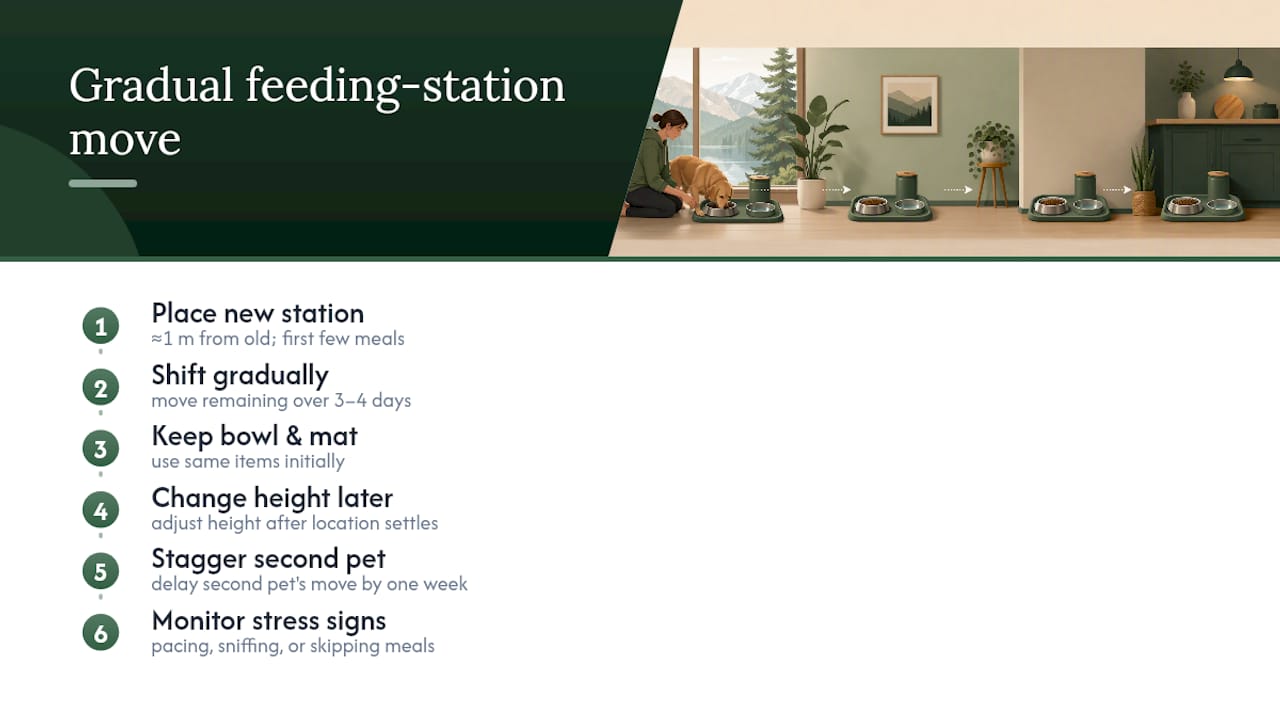
Keep the bowl and mat the same, at least initially. Familiar smells on a bowl your pet already associates with food ease the transition faster than a brand-new dish introduced at the same time as a new location. If you’re changing bowl height as part of the new setup, do that separately from the location change so your pet isn’t adjusting to two new variables at once.
Watch for signs of stress: pacing near the old spot, sniffing before eating, or skipping a meal. These usually resolve within a few days as the new spot becomes routine. For cats especially, avoid placing the new station near anything that changed recently, like a new appliance or piece of furniture, since cats read unfamiliar objects as a signal to be cautious around food.
If you’re introducing a second pet’s station at the same time, stagger the two moves by a week rather than doing both at once. One new adjustment at a time settles faster than two competing changes.
A few things I’d tell any pet owner before they start cutting wood
Size the bowl height to your actual pet, not the average dog in a size chart. And spend real money on the mat. It’s the cheapest part of the build and the one piece that saves you the most cleanup time over the life of the station.
— Burhan
Valuhub picks that make these builds easier
If you’d rather skip the jigsaw entirely, Valuhub’s rolling kitchen cart with utility storage gives you a ready-made mobile feeding station, complete with a solid top for bowls and shelving underneath for kibble bins and scoops. For homes that want the dresser-conversion look without the sawdust, the 61" pantry cabinet offers adjustable shelves that fit airtight bins of almost any size, plus enough depth to store bowls out of sight between meals.
Both pieces ship from Canadian warehouses, so there’s no customs delay between ordering and setting up your pet’s new corner. Multi-pet households can pair a cart with the cat litter box enclosure to keep feeding and litter zones visually separate in a small space, which matters more than most owners expect for keeping cats calm at mealtime. Browse the full range at Valuhub and check current stock before your next grocery run, since furniture with free shipping over $150 tends to move fast.
Sources
- DIY Pet Feeder Station with Food Storage - Pro Tool Reviews
- Pet Feeding Station Setup: The Perfect Spot for Stress‑Free Meals — PetCareLab
- Pet Feeding Station Ideas: Setup, Storage & Hygiene | HomeNeeds24
- Wall mount floating water bin – Crafted Canadian


