

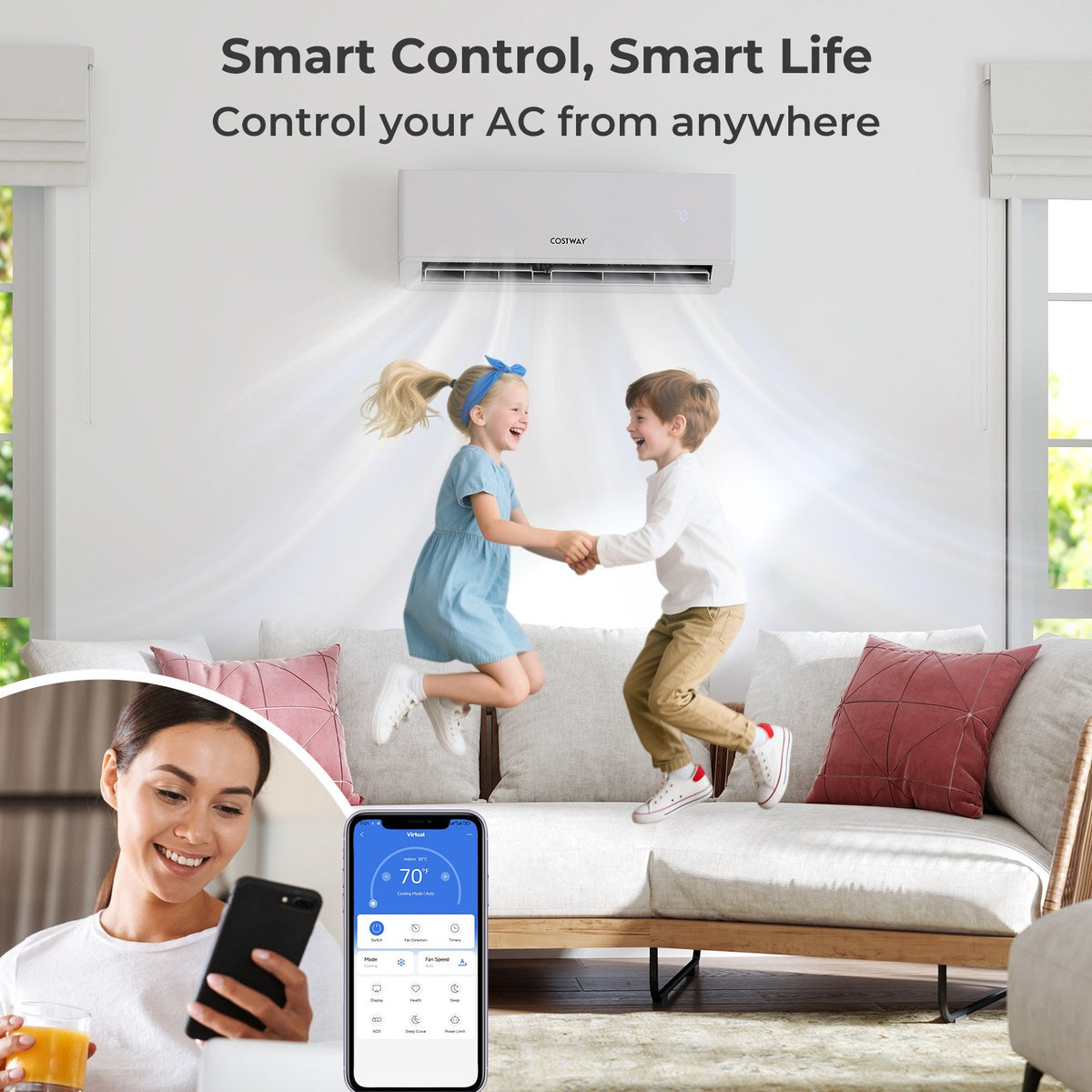


UltrEco 30,000 BTU 3 Zone Mini Split Heat Pump, 23 SEER2, Wifi, 7K + 7K + 24K
Fast delivery
Arrives quickly and safely
Buyer protection
Covered end to end
Secure packaging
Damage-free guarantee
Ships from
ValuHub Fulfillment
UltrEco 30,000 BTU 3 Zone Mini Split Heat Pump, 23 SEER2, Wifi, 7K + 7K + 24K
Description
UltrEco 30,000 BTU 3 Zone Mini Split Heat Pump, 23 SEER2, Wifi, 7K + 7K + 24K
Three indoor units rated 7,000, 7,000 and 24,000 BTU run from a single 30,000 BTU condenser, so three spaces can sit at three different temperatures. The manufacturer rates it 23 SEER2 for cooling and 10 HSPF2 for heating, with R32 refrigerant and low ambient heating to -25°C (-13°F).
Rooms that never had ducts in the first place
What usually goes wrong
Attic conversions, finished basements, additions and garages often have no ductwork at all. Extending ducts means opening ceilings and walls. Portable units need a hose out a window and have to be stored every autumn.
How this configuration answers it
Each zone needs one cored hole for the copper line set, communication wire and drain, not a duct run. This kit ships with a 16 ft line set, 13 ft of wire and a controller per zone, sized at 7,000, 7,000 and 24,000 BTU.
The point of a three zone system is that rooms stop arguing with each other. One space can sit at 20°C while the next sits at 24°C, and neither one has a window unit in it.

Everything that comes on the pallet
Laid out here is the whole kit: the 30,000 BTU outdoor unit, three white indoor units rated 7,000, 7,000 and 24,000 BTU, a remote for each one, the insulated copper line sets and the tape, putty and wiring that join them up. Each indoor unit answers to its own remote, so the 24,000 BTU unit can run hard while the other two idle.
January on the north side of the house
Frozen meltwater in the base pan is what kills an outdoor unit in a Canadian winter. A chassis heating element in this one keeps that pan clear. Rated limits are -25°C (-13°F) for heating and 52°C (125°F) for cooling, and output falls as it gets colder, so keep a second heat source for deep cold.


Sleeping in the same room as it
Sleep mode eases the set point overnight, the display can be switched off so nothing glows at you, and the 24 hour timer can shut a zone down after you drop off. The 7,000 BTU unit is rated 30 dB indoors. A quiet library sits around 40 dB for comparison.
Where the 23 SEER2 number comes from
Inverter compressors ramp up and down instead of slamming on and off, which is what holds a room steady and keeps the meter from spiking. The EnergyGuide panel on this outdoor unit shows 23 SEER2 for cooling and 10 HSPF2 for heating, and the refrigerant is R32. It carries ENERGY STAR, ETL and AHRI certification.

What you get
Three zones, one compressor
One 30,000 BTU outdoor unit runs all three indoor units. Each zone starts, stops and holds its own temperature, so an empty room costs nothing.
Matching each unit to its room
A common rule of thumb is 20 to 25 BTU per square foot (Carrier publishes 25). Here, a 7,000 BTU unit suits roughly 280 to 350 sq ft and a 24,000 BTU unit suits roughly 960 to 1,200 sq ft. Natural Resources Canada points to CSA F280-12 for a proper load calculation.
Inverter compressor
The compressor varies its speed instead of cycling on and off. Published ratings are 23 SEER2 for cooling and 10 HSPF2 for heating.
Built for a Canadian winter
A chassis electrical heater keeps the outdoor base pan clear. The manufacturer rates heating down to -25°C (-13°F) and cooling up to 52°C (125°F).
Line sets and wiring supplied
Each zone gets a 16 ft insulated copper line set and 13 ft of communication wire, plus a 6.5 ft drain hose. That is the material most quotes list separately.
Electrical supply
The outdoor unit runs on 208-230V~60Hz, single phase. It wants its own branch circuit, sized from the MCA and maximum breaker figures on the unit's own nameplate, with a disconnect within reach.
Controls
Wifi app plus a remote with a digital display for each zone, and a 24 hour timer.
Filters you can rinse
The indoor filters pull out, rinse under a tap and go back in. Clean filters are the cheapest way to keep airflow and running cost where they should be.
Specifications
| Zones | 3 (one outdoor unit, three indoor units) |
|---|---|
| Outdoor unit capacity | 30,000 BTU |
| Indoor unit capacities | 7,000, 7,000 and 24,000 BTU |
| System type | Ductless heat pump, cooling and heating |
| SEER2 (cooling) | 23 |
| HSPF2 (heating) | 10 |
| Refrigerant | R32 |
| Power supply | 208-230V~60Hz, single phase |
| Heating range | Down to -25°C (-13°F) |
| Cooling range | Up to 52°C (125°F) |
| Operating modes | 6: auto, cool, heat, dry, fan, sleep |
| Fan speeds | 5: auto, low, mid, high, strong |
| Indoor sound level | From 30 dB |
| Certification | ENERGY STAR, ETL and AHRI |
| Line set supplied | 16 ft per zone, insulated copper (gas and liquid) |
| Communication wire | 13 ft per zone |
| Drain hose | 6.5 ft per zone |
| Outdoor unit size | 41.2 x 17.9 x 31.8 in (L x W x H) |
| Indoor unit size, 7,000 BTU | 31 x 7.8 x 11.5 in (L x W x H) |
| Indoor unit size, 24,000 BTU | 44.1 x 9.1 x 13 in (L x W x H) |
| Colour | White |
| Manufacturer SKU | 514267398_UltrEco-30K-19 |
Capacity by zone
How it compares
Three ways people usually fix uneven rooms in a Canadian home. This is how they differ in practice, not in price.
| This 3 zone system | A window or portable unit per room | Adding central ducted air | |
|---|---|---|---|
| Separate temperature per room | Yes, three independent set points | Yes, but each room needs its own machine | Usually one thermostat for the whole zone |
| Heats as well as cools | Yes, rated to -25°C (-13°F) | Many are cooling only | Depends on the furnace or air handler fitted |
| Ductwork | None, one cored hole per zone | None | Full duct network to every room |
| Indoor equipment on show | Three slim units mounted high on a wall | A machine in every window | Vents and returns |
| Windows stay clear | Yes | No | Yes |
| Who installs it | Licensed HVAC and electrical trades | You do, out of the carton | Licensed trades, often several days on site |
Shipping
Ships from a Canadian warehouse. Free shipping on orders over $150. Some remote areas, PO boxes and surcharge regions may be excluded or charged extra.
Returns
Return within 14 days of purchase, unused, in original condition and packaging.
Warranty
Covered directly by the manufacturer under their warranty terms for material and manufacturing defects.
Who is this perfect for?
A big room plus two ordinary ones
The 24,000 BTU unit is sized for an open living and dining space, roughly 960 to 1,200 sq ft. The other two zones cover normal bedrooms without oversizing them.
Homes with no ducts to extend
Older houses, additions, attic conversions and finished basements rarely have ducts where they are needed. Three zones from one outdoor unit avoids opening up ceilings.
People who want heat as well as cooling
This is a heat pump, not a cooling-only air conditioner. It carries an HSPF2 heating rating of 10 and a chassis heater for winter operation.

What we stand behind
- Ships from a Canadian warehouse, with free shipping on orders over $150
- 14 day returns on unused items in original condition and packaging
- Covered by the manufacturer's own warranty for material and manufacturing defects
- Line sets, communication wire and a controller for every zone are in the box
Frequently asked questions
How much space will each indoor unit cover?
Sizing runs off the heat load of the room, not just its floor area, and Natural Resources Canada points to CSA F280-12 for the real calculation. As a rough check, 20 to 25 BTU per square foot is the usual rule of thumb. Here, a 7,000 BTU unit suits roughly 280 to 350 sq ft and a 24,000 BTU unit suits roughly 960 to 1,200 sq ft. Poor insulation, big west-facing windows or a 9 ft ceiling all push that figure up.
The three indoor units add up to 38,000 BTU but the outdoor unit is 30,000 BTU. Is that a mistake?
No. On any multi-zone system the indoor ratings are not meant to be added together, and sizing guides for multi-zone equipment say so plainly. The 30,000 BTU figure is what the outdoor unit can deliver at one time, and it is shared among whichever zones are calling for it. Three rooms rarely peak at the same moment, which is why this combination is offered.
How cold can it get outside before it stops heating?
The manufacturer rates low ambient heating down to -25°C (-13°F), helped by an electric heater in the outdoor chassis. Natural Resources Canada notes that air source heat pumps lose capacity and efficiency as it gets colder, with typical COPs falling from 2.0 to 5.4 at 8°C to 1.1 to 3.7 at -8°C, and that most units have a minimum operating temperature between -15°C and -25°C. Keep a backup heat source for the coldest stretches.
Can I install this myself in Canada?
Plan on a licensed installer. In Ontario, for example, the province states that by law only a certified technician may remove, discharge, handle and dispose of refrigerants, including HFCs, and that mechanical work on refrigeration equipment needs a Certificate of Qualification on top of the refrigerant certificate. Other provinces have their own halocarbon rules. The federal Code of Practice says the same thing in plainer terms: the technician doing work that could release refrigerant must hold the proper environmental certification. The 208-230V~60Hz, single phase power supply also means an electrician and a dedicated circuit.
You may also like


1260 sq.Ft Portable Quiet Dehumidifier for Home Laundry Room Bedroom Basement, 21pt Electric Moisture Air De-Humidifier with 3 Modes

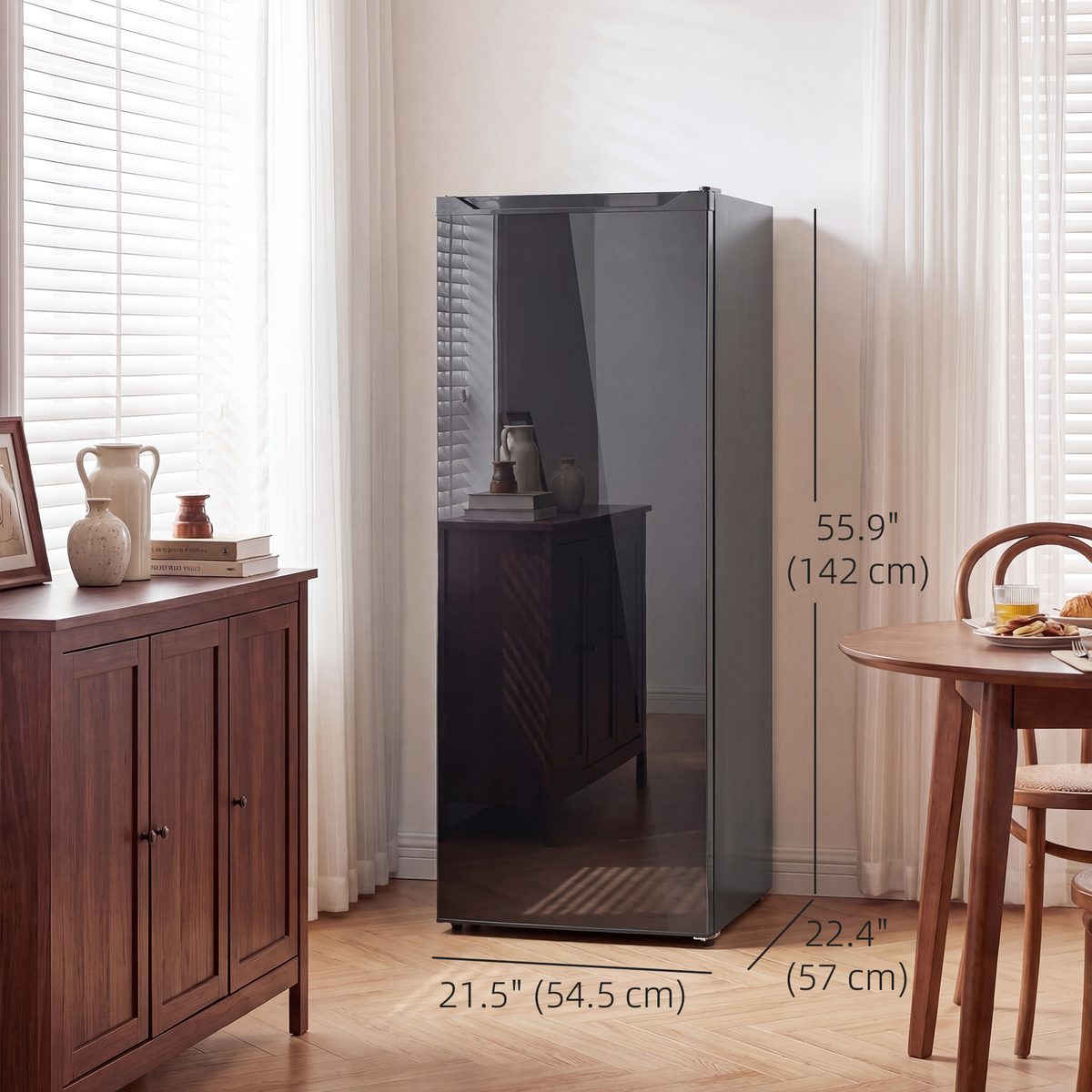
7.0 Cu.Ft Upright Freezer, Compact Stand Up Freezer with 6 Adjustable Shelves, Reversible Door for Home Office, Black


Double Door Mini Fridge with Freezer, 4.6 Cu.Ft Small Refrigerator with Thermostat, Shelves, Reversible Door, Black


3.2 Cu.Ft Beverage Fridge, 128 Can Drink Fridge with Glass Door, Auto-Defrost and LED Light for Soda, Beer, Black


Clothes Dryer with 6 Drying Modes, Laundry Dryer with Stainless Steel Tub 18 lbs, White


Compact Laundry Dryer, 1300W Portable Clothes Dryer with 4 Drying Modes, Stainless Steel Tub, White
 Staff Pick


Compact Laundry Dryer Machine, 1300W, 3.22 Cu. Ft. Electric Portable Clothes Dryer with 7 Drying Modes for Apartment or Dorm, White


Countertop Dishwasher with Built-in 6L Water Tank, 5 Wash Programs, Touch Control, LED Display, Dual Water Supply, White


100 Pint Smart Dehumidifier, 5,200 Sq. Ft., WiFi Large Dehumidifier with App, Alexa, Google Voice Control, Drain Hose
Staff Pick


